

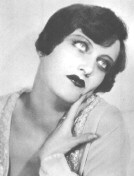
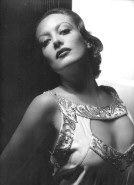


The Best of S
Sadie McKee • Yucca Salamunich • Salaries • Sally, Irene, and Mary • Samuel Goldwyn Theater • San Simeon • Saratoga • Scarritt Elementary • Diana Scarwid • A. L. "Whitey" Schafer • Natalie Schafer • Dore Schary • Joe Schenck • Nick Schenck • Paul Schrebnick • Reinhold Schunzel • Zachary Scott • Screen Guild Theater • Heather Sears • Dorothy Sebastian • Secret Storm • Edward Sedgwick • Seein' Stars • David O. Selznick • Irene Mayer Selznick • Rod Serling • Seven Springs Press • Sex in Films • Peter Shaw • Norma Shearer • Vincent Sherman • Jimmy Shields • The Shining Hour • J.J. Shubert • Fred Silverman • Frank Sinatra • Bert Six • The Sixth Sense • Smirnoff • Liz Smith • Pete Smith • Somewhere I'll Find You • Social Security Number • Sorkie • Spanish Geranium • Austin Osman Spare • Steven Spielberg • Leonard Spigelgas • Spring Fever • John Springer • Robert Stack • St. Agnes Academy • Stanislavsky • Barbara Stanwyck • Alfred Steele • Jules Stein • Max Steiner • Stephens College • Ray Sterling • Isaac Stern • Donald Ogden Stewart • James Stewart • Stinky • Adela Rogers St. Johns • St. Malachy's • Stokowski • The Stolen Jools • The Story of Esther Costello • Strait-Jacket • Strange Cargo • Adele Strassfield • Howard Strickling • Hunt Stromberg • Effie Stuttle • Sudden Fear • Margaret Sullavan • Barry Sullivan • Ed Sullivan • Beth Fairbanks Sully • Susan and God • Suspense • Gloria Swanson
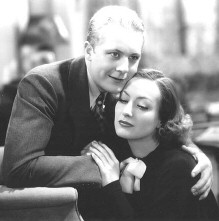 Sadie
McKee. MGM, 1934. Directed by Clarence
Brown, 88 minutes. Joan stars as
Sadie-the-maid
in her third film with husband-to-be Franchot Tone.
Tone plays the rich son in the house she grew
up working in and the friend of later Sadie Sugar Daddy Edward
Arnold. Gene Raymond co-stars as the n'er-do-well
Sadie runs off to the Big City with. (Trivia: A
clip from this film is shown in Whatever
Happened to Baby Jane?
as Joan's character Blanche watches one of her old movies on TV.) Says
Joan in
CWJC: Everything about "Sadie McKee"
was right--Gene Raymond, Franchot Tone, the script, Clarence Brown's
direction,
Adrian's costumes, the works.
Sadie
McKee. MGM, 1934. Directed by Clarence
Brown, 88 minutes. Joan stars as
Sadie-the-maid
in her third film with husband-to-be Franchot Tone.
Tone plays the rich son in the house she grew
up working in and the friend of later Sadie Sugar Daddy Edward
Arnold. Gene Raymond co-stars as the n'er-do-well
Sadie runs off to the Big City with. (Trivia: A
clip from this film is shown in Whatever
Happened to Baby Jane?
as Joan's character Blanche watches one of her old movies on TV.) Says
Joan in
CWJC: Everything about "Sadie McKee"
was right--Gene Raymond, Franchot Tone, the script, Clarence Brown's
direction,
Adrian's costumes, the works.
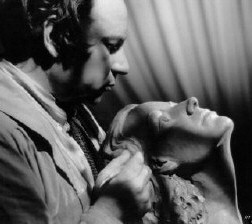 Salamunich,
Yucca. (12/04/1904 - 6/19/1961)
Salamunich,
Yucca. (12/04/1904 - 6/19/1961)
Yugoslavian artist who sculpted the bust of Joan that appears in the '64 movie Strait-Jacket. The sculpture was originally created and presented to Joan on the set of A Woman's Face in 1941 and bears the dedication "To Christina." (In Strait-Jacket, the plot had the insane, jealous daughter sculpting the bust. Ahem.)
See this site's Salamunich Art page for 1941 and 1964 shots of Joan with the bust and shots of Salamunich creating the bust in 1941.
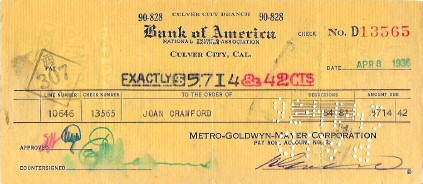
Salaries of Joan. (NOTE: Post MGM the record becomes spotty since other film and television companies have not always provided records of salary info.) To convert salaries from a year to today's money, click on this government "inflation calculator" link.
1923: $12 per week wrapping packages at the Wolff Clothing Store; $13 per week at Rothschild's department store; $15 per week selling women's wear at Emery, Bird, Thayer (all in Kansas City); $20 per week as chorus girl in Katherine Emerine's Springfield, Missouri, show. (JCB)
1924: $25 per week as chorus girl in Ernie Young's shows; $35 per week as NYC chorus girl in "Passing Show of 1924," earning extra money after-hours dancing at Club Richman. (JCB)
MGM:
1925: 7-year contract. 1st 6-month option: $75 per week. Option picked up at $100 per week.
1927: $500 per week for first half-year, $400 for rest of year.
1928: $1000 per week, raised to $1500 per week after the Our Dancing Daughters fall release.
1931 (April 7): Received $10,000 bonus, plus contract of $3000 per week, with four options of one year each, rising by $500 per week until she was to reach $5000 per week in 1936.
1934 (Dec. 10): 3-year contract. $7500 per week for 44 weeks of first year; $8500 the second year; $9500 the third. $50,000 bonus if she exceeded 9 films in the three years.
1936: According to the US Treasury Dept., Joan earned $302,307. (Thanks to Norman for the 1936 and 1937 info.)
1937: In an Associated Press article published in the NYTimes 4/7/38, Joan earned $351,358, and was #14 on a list of only 17 Americans who earned more than $300,000 this year. The complete list:
1) Louis B. Mayer, movie executive: $1,296,503
2) J. Robert Rubin, movie executive: 754,254
3) N. M. Schenck, movie executive: 541,602
4) William Randolph Hearst, publisher: 500,000
5) Fredric March, movie actor: 484,687
6) Greta Garbo, movie actress: 472,602
7) Major Edward Bowes, radio entertainer: 427,817
8) Thomas J. Watson, president of International Business Machines Corp.: 419,398
9) E.G. Grace, president of Bethlehem Steel Corp.: 394,586
10) David Bernstein, movie executive: 382,816
11) George W. Hill, president of American Tobacco Co.: 380,976
12) Marlene Dietrich, movie actress: 370,000
13) A.M. Loew, movie executive: 356,074
14) Joan Crawford, movie actress: 351,538
15) F.B. Davis, president of US Rubber Products, Inc.: 322,999
16) Spyros P. Skouras, president of National Theatres Amusement Co.: 320,054
17) David C. [sic] Selznick, movie executive: 303,500
1938: $330,000 per year for five years and 10 weeks. For work in excess of 40 weeks per year, $8250 per week. (US)
1942: Columbia paid her $330,000 on loan-out from MGM for They All Kissed the Bride. (IMDb)
1943 (June 29): Joan paid MGM $100,000 to terminate her contract. (US)
1943: Two days after leaving the MGM payroll, Joan signed with Warners for a 3-picture $500,000 deal, on a weekly salary. She had herself taken off salary when Warners at first couldn't find a suitable picture. (JCB)
1947: After the success of Mildred and Humoresque, Warners signed her to a 7-year contract at $200,000 a picture. (JCB)
1952: Joan got out of her Warners contract and signed up for RKO's Sudden Fear, with the choice of either a $200,000 salary or 40% of the film's profits. She chose the 40%, which earned her more money. (JCB)
1953: Signed 2-picture deal with MGM for $125,000 each. (Contract lapsed in Oct. '54, so no 2nd film after Torch Song was made.) (JCB) Amount was paid in 83 installments for tax purposes. (IMDb)
1957: Received $200,000 from Columbia for Esther Costello. (IMDb)
1959: Began receiving $60,000 a year from Pepsi-Cola, as a non-executive director, which continued as a lifetime pension, though in '73 the company retired her, cutting off her $40,000 yearly expense account and $12,000 yearly secretarial account. (JCB) Also in '59, she received $65,000 for The Best of Everything. (IMDb)
1962: Her Baby Jane deal gave her $30,000 plus 15% of producers' net (JCB says $40,000 and 10% of net), which earned her nearly $1 million.
1964: $50,000 and percentage of profits for Strait-Jacket. (JCB)
1965:
$50,000 for I Saw What You Did. (IMDb)
$7500 plus $2500 hostess fee for her 10/9/65 Hollywood Palace appearance.
1969: $50,000 for TV's Night Gallery. (JCB)
1970: $50,000 for Trog. (IMDb)
1972: $2500 for TV's "The Sixth Sense." (JCB)
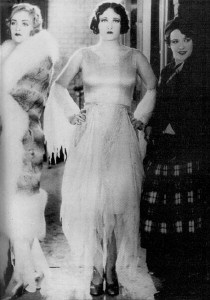 Sally,
Irene, and Mary. MGM silent,
1925. Directed by Edmund
Goulding, 58 minutes. (Based
on the 1922 Broadway play that ran for 313 performances and remade in
1938.)
Joan
plays "Irene," a Broadway showgirl in love with a cad, and co-stars with
Sally
O'Neil, Constance
Bennett, and
William
Haines. Reportedly Bennett, the biggest star of the
bunch, snubbed
Joan, but O'Neil and, especially, Haines became close friends. (LW) It
was her
first of four films with Haines. Said Joan in CWJC:
Sally,
Irene, and Mary. MGM silent,
1925. Directed by Edmund
Goulding, 58 minutes. (Based
on the 1922 Broadway play that ran for 313 performances and remade in
1938.)
Joan
plays "Irene," a Broadway showgirl in love with a cad, and co-stars with
Sally
O'Neil, Constance
Bennett, and
William
Haines. Reportedly Bennett, the biggest star of the
bunch, snubbed
Joan, but O'Neil and, especially, Haines became close friends. (LW) It
was her
first of four films with Haines. Said Joan in CWJC:
I loved "Sally, Irene, and Mary"--it gave me a character I could lose myself in and a chance to work with two fine actresses, Constance Bennett and Sally O'Neil, and a very good director, Edmund Goulding. He taught me a lot, and so did the cameraman--I think his name was Arnold. John Arnold. Anyway, that picture told me I was doing the right thing, that I might just last.
Samuel Goldwyn Theater. Where Joan's Los Angeles memorial service was held in June 1977.
San Simeon. William Randolph Hearst's ranch/castle in the Santa Ynez mountains, 200 miles north of Los Angeles. A congregating place for Hollywood royalty (Hearst's consort was actress Marion Davies, a friend of Joan's from MGM). Joan was invited there on several occasions, first with friend William Haines, later with husband Doug Fairbanks, Jr.
Saratoga. Clark Gable film that Joan turned down, thus straining relations between them. Jean Harlow took over what would have been her role.
Scarritt Elementary School. Joan attended 3rd grade at this Kansas City school around 1916. See the Geography page for photo and more info.
Scarwid, Diana. Played Christina in 1981's Mommie Dearest.
 Schafer,
A. L. "Whitey." (5/16/1902
- 8/31/51)
Schafer,
A. L. "Whitey." (5/16/1902
- 8/31/51)
Hollywood stills photographer. Shot Columbia publicity of Joan for They All Kissed the Bride.
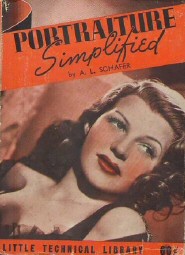
Schafer started his career processing prints at Famous Players-Lasky in 1921, moving to the Thomas Ince Studio in 1923, where he began to shoot stills. In 1935, he was appointed head of the Columbia stills department. In 1941, he replaced Eugene Robert Richee as the Paramount stills photography head. His book Portraiture Simplified of the same year described his philosophy of celebrity photography, with the ultimate goal "to get the entire character of your subject into a single picture.”
 Schafer,
Natalie. (11/5/1900 - 4/10/1991)
Schafer,
Natalie. (11/5/1900 - 4/10/1991)
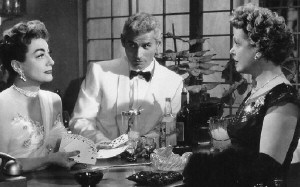
Perhaps best known for her role as Lovey Howell in TV's Gilligan's Island, character actress Schafer appeared with Joan in '42's Reunion in France and '55's Female on the Beach. Said Schafer re working with Joan on the "Reunion" set:
I think Joan was just about at the end of her rope. She wasn't brutal or offensive to me or to anyone else--just tightly wound. I think she knew her days were numbered at MGM..But she remained very professional in spite of all that. Whatever was going on in her mind, you might see glimmers of it in her expression, in her off-camera mood, but she was always about getting the work done, being a pro. She thought of her colleagues who were there to do a picture, fair or foul. (JC: Essential Biography)
Schary, Dore. MGM's production chief after L.B. Mayer.
Schenck, Joe. Produced Joan's 1932 film Rain, personally asking his brother Nick, president of MGM and Loew's, to lend Joan's services to the United Artists film.
Schrebnick, Paul. MGM studio worker who often asked for a gardenia from Joan at the end of her workday. When he died in a traffic accident, Joan sent a blanket of gardenias spelling out "Paul" for his coffin. (JCB)
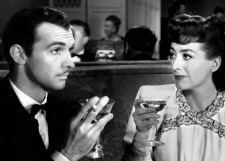 Scott,
Zachary (2/21/1914 - 10/3/1965). Co-stars with Joan in
Mildred
Pierce ('45) as
her playboy boyfriend "Monte Beragon," and in Flamingo
Road ('49)
as the weak-willed deputy and love interest "Fielding Carlisle."
Scott,
Zachary (2/21/1914 - 10/3/1965). Co-stars with Joan in
Mildred
Pierce ('45) as
her playboy boyfriend "Monte Beragon," and in Flamingo
Road ('49)
as the weak-willed deputy and love interest "Fielding Carlisle."
Wikipedia
page.
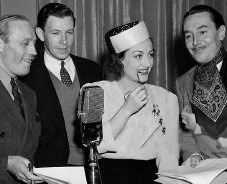 Screen
Guild Theater. A radio anthology series that ran from 1939 to
1952. Joan appeared on its CBS Radio debut episode ("Variety
Revue," January 8, 1939), in a show emceed by George Murphy
that also featured Jack Benny, Judy Garland, Reginald Gardiner,
and Ralph Morgan.
Screen
Guild Theater. A radio anthology series that ran from 1939 to
1952. Joan appeared on its CBS Radio debut episode ("Variety
Revue," January 8, 1939), in a show emceed by George Murphy
that also featured Jack Benny, Judy Garland, Reginald Gardiner,
and Ralph Morgan.
Sears, Heather. Plays the title role of an Irish deaf-mute girl in Joan's 1957 film The Story of Esther Costello. Joan found her a "delight" and a "reward" to work with. (EB)
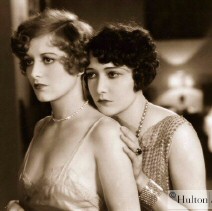 Sebastian,
Dorothy (4/26/03 - 4/8/57). Co-stars
with Joan in 4 films: Twelve
Miles
Out ('27), Our Dancing Daughters ('28), Our
Blushing
Brides ('28), Montana
Moon ('30), plus has an uncredited role
as a "Saleswoman" in '39's The Women. Joan's
press agent Jerry Asher claimed the
two
had a sexual relationship. (EB)
Sebastian,
Dorothy (4/26/03 - 4/8/57). Co-stars
with Joan in 4 films: Twelve
Miles
Out ('27), Our Dancing Daughters ('28), Our
Blushing
Brides ('28), Montana
Moon ('30), plus has an uncredited role
as a "Saleswoman" in '39's The Women. Joan's
press agent Jerry Asher claimed the
two
had a sexual relationship. (EB)
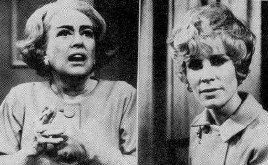 Secret
Storm, The. Christina won the role
of "Joan Borman Kane" on this soap opera in 1968. When she fell
ill on October 16 of that year, Joan took over her role (that of a
28-year-old
woman; Joan was around 64) for four shows: Friday, October 25; Monday, October
28; Wednesday, October 30; and Thursday, October 31. According to
Christina in Mommie Dearest, Joan appeared drunk onscreen,
but the show's ratings soared that week and the event garnered much
publicity (The Last Word). Joan later said of her appearance: "I
did try a soap-opera sequence once...And I was so ashamed of myself I
did cry
all the way home." (Conversations with Joan Crawford)
See the TV
page for
more info.
Secret
Storm, The. Christina won the role
of "Joan Borman Kane" on this soap opera in 1968. When she fell
ill on October 16 of that year, Joan took over her role (that of a
28-year-old
woman; Joan was around 64) for four shows: Friday, October 25; Monday, October
28; Wednesday, October 30; and Thursday, October 31. According to
Christina in Mommie Dearest, Joan appeared drunk onscreen,
but the show's ratings soared that week and the event garnered much
publicity (The Last Word). Joan later said of her appearance: "I
did try a soap-opera sequence once...And I was so ashamed of myself I
did cry
all the way home." (Conversations with Joan Crawford)
See the TV
page for
more info.
Seein' Stars. See the Feg Murray entry.
Selznick, David O. Producer of Joan's '33 film Dancing Lady and, later, Gone With the Wind; in 1936 Selznick had wired his agent re GWTW: "I believe I would buy it now for some such combination as Gable and Joan Crawford." (LW)
Selznick, Irene Mayer. (4/2/1907 - 10/10/1990) Daughter of Louis B. Mayer, wife of David O. Selznick (1930 - 49), and successful producer (Streetcar Named Desire, The Chalk Garden). In her 1983 autobiography, A Private View, she writes of meeting Joan:
Going to the wardrobe department for a fitting just happened to give us the opportunity of meeting a newcomer the very day she arrived on the lot. She was later named Joan Crawford. I thought she was preposterous – moon-faced, overweight, with frizzy hair, and she was wearing a tight black silk dress and an unfortunate pair of shiny black shoes, notable for the pompoms which adorned them. She caught on quickly and changed her style.
Joan tried harder than anyone else had ever tried. With increasing recognition, her determination became almost tangible. She blamed her overwhelming sense of rivalry on the preferred position Norma Shearer came to hold as Irving's wife, ignoring the fact that even Norma didn't always get the roles she wanted. She alsooverlooked the fact that Norma had been with the company since early Mission Road and had traveled a long way. The truth was that as the ever-growing group of MGM actresses reached stardom, each found the competition intense. Every one of them had come up through the ranks except Garbo; she began as a star.
Serling, Rod. See Night Gallery.
Seven Springs Press. Vanity press founded by Christina Crawford in 1998 to publish the 20th Anniversary Edition of Mommie Dearest. Want to write her? Seven Springs Press, 11150 Sanders Road, Tensed, Idaho, 83870. Phone: (208) 274-2470.
Sex in films. Says Joan in CWJC:
I find suggestion a hell of a lot more provocative than explicit detail. You didn't see Clark and Vivien rolling around in bed in GWTW, but you saw that shit-eating grin on her face the next morning and you knew damned well she'd gotten properly laid...In my fallen-woman roles...nobody saw me do the actual falling...but they knew I'd fallen, and when it happened again--well, they got the point, and maybe the pornography that went on inside their heads was better than the actual thing would have been on screen...
Censorship was a pain in the ass--when it was moral or political--but in the long run, considering what I see now, I think it served a purpose. Marlon Brando...Oh, what was the film [Last Tango in Paris, Joan]...anyway the nude scene. He's at least 40 pounds overweight, and I think the only sex appeal he has would be to a meat packer. That's art?
...the emphasis seems to be on the seamier side of real life, as though we should be more interested in what happened in the bathroom and the bedroom instead of living room, kitchen, and office. The perspective is crazy. If we think about our lives, and divide time into the portions spent on making a living, eating, talking, reading, being entertained by TV or movies or radio or theater or whatever, and having sex, I think we'd find sex coming out on the short end of the stick. Unless you're a whore it doesn't give you the wherewithal to survive...
...good God, isn't it more fun doing it or imagining it than watching it?... I know I sound like some sort of old Puritan, but I still think back to GWTW, and that morning scene with Scarlett O'Hara. It was a hell of a lot more sexually stimulating than a glimpse of fat Marlon Brando. (And butter, yet; I hope it was unsalted.)
Shaw, Peter. Irish actor and writer with whom Joan had an affair in the '40s. (LW)
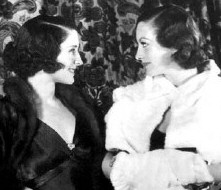 Shearer,
Norma (8/10/1902 -
6/12/1983).
Married to MGM production
head Irving
Thalberg, Shearer was Joan's
main rival at the studio because it seemed she was given the plum roles.
(She
was also a top moneymaker for the studio.) Joan's first screen
appearance was
playing Shearer's double in 1925's Lady of
the Night, and the two
co-starred in 1939's The Women, where Joan
distracted Norma with
her incessant knitting. Joan also took over the role of
Susan in 1940's Susan and God after the
40-year-old Shearer refused
to play the mother of a 14-year-old girl. (Leading to the famous Joan
quote:
"I'd play Wally Beery's
grandmother if it's a good part!") (LW) Shearer
retired from films in 1942.
Shearer,
Norma (8/10/1902 -
6/12/1983).
Married to MGM production
head Irving
Thalberg, Shearer was Joan's
main rival at the studio because it seemed she was given the plum roles.
(She
was also a top moneymaker for the studio.) Joan's first screen
appearance was
playing Shearer's double in 1925's Lady of
the Night, and the two
co-starred in 1939's The Women, where Joan
distracted Norma with
her incessant knitting. Joan also took over the role of
Susan in 1940's Susan and God after the
40-year-old Shearer refused
to play the mother of a 14-year-old girl. (Leading to the famous Joan
quote:
"I'd play Wally Beery's
grandmother if it's a good part!") (LW) Shearer
retired from films in 1942.
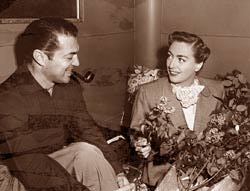 Sherman,
Vincent. (7/16/1906 - 6/18/2006) Primarily a director for Warner Brothers
(working with Bette Davis and Ida
Lupino, among others) and director of Joan
films The Damned
Don't Cry ('50), Harriet
Craig ('50),
and Goodbye, My
Fancy ('51). He and Joan also had an often violent
affair
during this time. (Christina writes in MD
of having to break up one of their
brawls, and he's also appeared in recent Joan documentaries gleefully
discussing their
knockdown-dragouts.)
Sherman,
Vincent. (7/16/1906 - 6/18/2006) Primarily a director for Warner Brothers
(working with Bette Davis and Ida
Lupino, among others) and director of Joan
films The Damned
Don't Cry ('50), Harriet
Craig ('50),
and Goodbye, My
Fancy ('51). He and Joan also had an often violent
affair
during this time. (Christina writes in MD
of having to break up one of their
brawls, and he's also appeared in recent Joan documentaries gleefully
discussing their
knockdown-dragouts.)
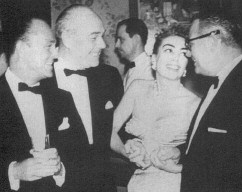 Shields,
Jimmy. Husband of longtime
Joan-friend, actor/decorator William
Haines. Joan and the
two men maintained
a lifelong friendship, and Joan called them "the happiest
married couple in Hollywood." (LW)
Shields,
Jimmy. Husband of longtime
Joan-friend, actor/decorator William
Haines. Joan and the
two men maintained
a lifelong friendship, and Joan called them "the happiest
married couple in Hollywood." (LW)
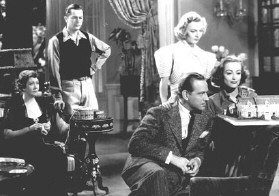 Shining
Hour, The. MGM, 1938. Directed
by Frank Borzage, 76 minutes.
Joan stars
as nightclub dancer "Olivia Riley," who marries a country gentleman
(Melvyn Douglas)
and has to learn to get along with his family (brother Robert
Young, who's also in love with Olivia; the brother's
kindly
wife, Margaret
Sullavan;
and mean sister Fay
Bainter). Says Joan in CWJC: "The
Shining Hour" failed, but sort of nobly. On Broadway it had been a smash
hit. Margaret Sullavan, Robert Young, Melvyn Douglas and I were all
wasted,
and I think this was about the time my loyal public began dwindling. You
can't
keep 'em coming to bad films.
Shining
Hour, The. MGM, 1938. Directed
by Frank Borzage, 76 minutes.
Joan stars
as nightclub dancer "Olivia Riley," who marries a country gentleman
(Melvyn Douglas)
and has to learn to get along with his family (brother Robert
Young, who's also in love with Olivia; the brother's
kindly
wife, Margaret
Sullavan;
and mean sister Fay
Bainter). Says Joan in CWJC: "The
Shining Hour" failed, but sort of nobly. On Broadway it had been a smash
hit. Margaret Sullavan, Robert Young, Melvyn Douglas and I were all
wasted,
and I think this was about the time my loyal public began dwindling. You
can't
keep 'em coming to bad films.
Shubert, J.J. (1879 - 12/26/63) Polish-born Broadway impresario. In April 1924, he was in the audience of a show at the Oriole Terrace in Detroit that Joan was performing in. Enchanted after she "accidentally" kicked over a drink on his table, he came backstage and offered her a job with his "Innocent Eyes" show that would soon debut on Broadway. She skipped out on the Terrace and left for NYC two days later. (JB) Aside from "Innocent Eyes," he also produced Joan's 2nd and last Broadway appearance, "The Passing Show of 1924." Internet Broadway Database info.
Shubert said of Joan:
She had something. I don't know how to define it, but every man in the audience picked her out. She wasn't particularly sexy but she seemed to enjoy herself every minute she was on stage, and that made the audience enjoy the show more. (CWJC)
Silverman, Fred. Chief of daytime programming at CBS in 1968 when Joan made her appearance substituting for daughter Christina on the soap The Secret Storm.
Six, Bert. Warner Brothers studio photographer.

American paranormal television series produced by and filmed at Universal Studios, and broadcast by ABC from January 15 to December 23, 1972.
On September 30, 1972, Joan appeared in the
episode "Dear Joan, We're Going to Scare You to Death." It was her
last screen performance.
See this site's 1970s TV page for ad/flyer/ABC press release for Joan's episode.
Smirnoff. 100 proof, Joan's liquor of choice.
Smith, Liz. Native Texan who made her way to the Big Apple and became a renowned gossip columnist. Click here to read excerpts from her 2000 book Natural Blonde about her encounters with Joan.
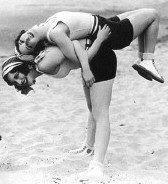 Smith,
Pete. MGM publicity
chief in the 1920s. Smith was
impressed with Joan (then "Lucille LeSueur") and persuaded MGM chief
L.B. Mayer to begin a
major promotional campaign for her, including giving her
a new name. (CWJC) He was also responsible for advising
her to get into the gossip columns, and he set up her early series of
athletic photos, many
with fellow contract player Dorothy
Sebastian (pictured at right), that were shot by Don
Gillum
and subsequently published in newspapers
across the country in 1925.
Smith,
Pete. MGM publicity
chief in the 1920s. Smith was
impressed with Joan (then "Lucille LeSueur") and persuaded MGM chief
L.B. Mayer to begin a
major promotional campaign for her, including giving her
a new name. (CWJC) He was also responsible for advising
her to get into the gossip columns, and he set up her early series of
athletic photos, many
with fellow contract player Dorothy
Sebastian (pictured at right), that were shot by Don
Gillum
and subsequently published in newspapers
across the country in 1925.
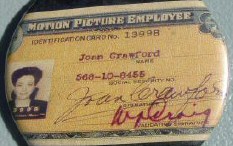 Social
Security Number. According to a studio ID card issued in
the 1940s, it was 568-10-8455.
Social
Security Number. According to a studio ID card issued in
the 1940s, it was 568-10-8455.
Somewhere I'll Find You. After wife Carole Lombard's death, Clark Gable was working on this 1942 film when he received a note from longtime friend/lover Joan: "If you would like to stop by and have a quiet dinner, I'll be home rather late tonight and all this week." Almost every evening during the making of this film, Gable went to Joan's home on Bristol Avenue to pour out his grief. (JC)
Sorkie.
In MD, Christina says that
Sorkie was "a Christian
Science practitioner
who lived by herself in a small New York City apartment. My mother had
met her
when she was younger and was devoted to her. Sorkie was a rotund woman,
and...is
the only fat person my mother ever tolerated." In Los Angeles, Joan
would
call Sorkie regularly for advice ("on Sundays and almost every other day
of the week for at least 25 years"), and Christina says "until her
death in 1959, I know that she was the most influential person in
Mommie's life."
Spanish
Geranium. See Fragrances.
 Spare,
Austin Osman (12/30/1886 - 5/15/1956)
Spare,
Austin Osman (12/30/1886 - 5/15/1956)
English
artist and occultist who painted Joan in 1933.
This site's Spare Art page. Wikipedia page. Occult-world.com page.
 Spielberg,
Steven. (12/18/1946 -- )
Spielberg,
Steven. (12/18/1946 -- )
The twenty-two-year-old Spielberg's first industry job was directing Joan in the pilot episode of the TV show Night Gallery, in a segment called "Eyes." The show aired 11/8/69. Said Joan of Spielberg: "He's got more security than any person I've ever known." She also taught him how to burp. Said Spielberg of Joan:
She is five feet four, but she looks six feet on the screen. In a two-shot with anyone, even Gable, your eyes fix on her. She is imperious, yet with a childlike sparkle. She is haughty, yet tender. She has no great range as an actress, yet within the range she can perform better than any of her contemporaries. (JCB)
IMDb page. TCM page. Wikipedia page.
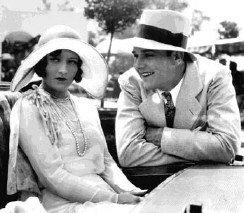 Spring
Fever. MGM silent film, 1927, starring William
Haines. Directed by Edward
Sedgwick, 60 minutes. Joan plays "Allie Monte," a golf groupie who
falls for golfer Haines, who's pretending to be rich. Says Joan in CWJC:
...a waste of
everyone's time and money. God, golf is dull on film.
Spring
Fever. MGM silent film, 1927, starring William
Haines. Directed by Edward
Sedgwick, 60 minutes. Joan plays "Allie Monte," a golf groupie who
falls for golfer Haines, who's pretending to be rich. Says Joan in CWJC:
...a waste of
everyone's time and money. God, golf is dull on film.
 Springer,
John. Press agent and sometime producer. He created and hosted the
"Legendary
Ladies of the Screen" series at NYC's Town Hall, at which
Joan appeared
on 4/8/73. (He also wrote the introduction to "Conversations with Joan
Crawford" and appeared in the A&E channel's documentary on her
life, "Always the
Star.")
Springer,
John. Press agent and sometime producer. He created and hosted the
"Legendary
Ladies of the Screen" series at NYC's Town Hall, at which
Joan appeared
on 4/8/73. (He also wrote the introduction to "Conversations with Joan
Crawford" and appeared in the A&E channel's documentary on her
life, "Always the
Star.")
In September 1974, he asked Joan to host a party for another of his "Legendary Ladies," Rosalind Russell, at the Rainbow Room; she did, but the next day when she saw the unflattering pictures of herself taken that evening, she said "If that's how I look, they won't see me again." It was her last public appearance.
Stack, Robert. Joan's co-star in the 1963 film The Caretakers.
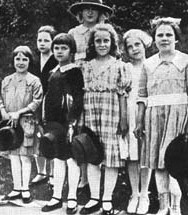 St.
Agnes Academy. A convent school in Kansas City (128 N. Hardesty, at
Scarritt)
that Joan attended from 3rd through 6th grades, one of 50 girls. Once
her stepfather
Henry Cassin left her
mother and money became tight, Joan was forced to work
for her keep there. See the Geography
page for photo of the school and more info.
St.
Agnes Academy. A convent school in Kansas City (128 N. Hardesty, at
Scarritt)
that Joan attended from 3rd through 6th grades, one of 50 girls. Once
her stepfather
Henry Cassin left her
mother and money became tight, Joan was forced to work
for her keep there. See the Geography
page for photo of the school and more info.
Stanislavsky, Konstantin. (1863 - 1938) Russian actor, director, and acting teacher, who deeply influenced New York's Group Theatre, of which Joan-husband Franchot Tone was a part. Said Harold Clurman, one of the founders of the Group Theatre: "When I sent Franchot a copy of Stanislavsky's 'An Actor Prepares,' she [Joan] grabbed it and read it first; her bold markings covered its pages."
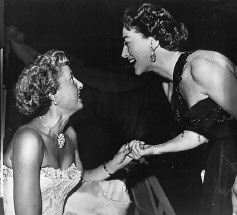
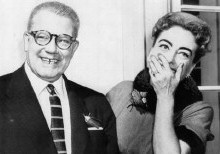 Steele,
Alfred Nu. (4/24/01 - 4/19/59) President of Pepsi-Cola, Joan's
fourth and last husband, married
from 5/10/55 until his death in April 1959. Says Joan in CWJC:
Steele,
Alfred Nu. (4/24/01 - 4/19/59) President of Pepsi-Cola, Joan's
fourth and last husband, married
from 5/10/55 until his death in April 1959. Says Joan in CWJC:
I was more in love with Alfred than any man in my life. He wasn't as handsome as Doug or Clark or Franchot or Phillip, but he had a virility, a sense of assurance, that made him the center of attraction in any room. Women were crazy about him and men liked him. He made everyone feel at ease. I fell madly in love with him the night we met and the all-too-few years with him were the happiest years of my life. I didn't even mind going into semi-retirement as an actress; life with Alfred was so fulfilling...we established wonderful relationships with the children, and we traveled a great deal. There was virtually nothing to disagree about. I miss him still.
They first met briefly at a party in 1953 when Steele was still married to his second wife. They became reacquainted when the newly divorced Steele phoned Joan on New Year's Eve 1954, when she was staying alone on the set of Female on the Beach. They married at the Flamingo Hotel in Las Vegas that May, then sailed to Europe on the SS United States for their honeymoon.
Steele graduated from Northwestern University in 1923, where he played football, and began his career as an ad executive, eventually hired by Coca-Cola as VP for marketing. He began working for Pepsi in 1949, reducing the sugar content of the soda, modernizing their ad campaign, and beginning to focus on third-world markets in Asia, Africa, and South America. Sales tripled between 1955 and 1957. As noted in MD, Steele spent nearly $400,000 combining two apartments at 2 East Seventieth Street in NYC for his and Joan's living quarters. When he died, his estate was valued at around $600,000, but after taxes and debts, nothing was left. Two days after his death, Joan was elected to fill his vacancy on the Pepsi-Cola board of directors, a position she held until her forced retirement in 1973. (JCB)
The ashes of the two are interred side by side at New York's Ferncliff Mausoleum. Click here to see a copy of their May 10, 1955, marriage certificate.
Stein, Jules. Head of MCA (Music Corporation of America). In the early '40s he expanded his company from booking bands to representing film stars, and Joan became an MCA client, with Lew Wasserman as her agent. (JCB)
Steiner, Max. (5/10/1888 - 12/28/1971) Legendary film composer (primarily for Warner Bros.), who scored over 400 films, including Joan's Mildred Pierce, Flamingo Road, and The Damned Don't Cry (the latter uncredited). He was nominated for an Academy Award 18 times, winning 3 times. In 2003, he appeared on the U.S. stamp series honoring films (his hand is seen notating a score). IMDb info.
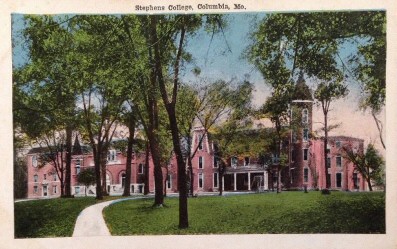 Stephens
College. Women's college in Columbia, Missouri (currently a 4-year college,
but a 2-year junior college when Joan was there). Joan attended
during the fall semester of 1922, after which she dropped out. According
to Jazz Baby, she
was
registered for the following courses during this semester: English
composition,
typewriting, preventive medicine, shorthand, bookkeeping, psychology,
foods,
religious fundamentals, and rhythm. She lived at Main Hall and worked as
a waitress
in the downstairs dining room.
Stephens
College. Women's college in Columbia, Missouri (currently a 4-year college,
but a 2-year junior college when Joan was there). Joan attended
during the fall semester of 1922, after which she dropped out. According
to Jazz Baby, she
was
registered for the following courses during this semester: English
composition,
typewriting, preventive medicine, shorthand, bookkeeping, psychology,
foods,
religious fundamentals, and rhythm. She lived at Main Hall and worked as
a waitress
in the downstairs dining room.
See also this site's Geo:
Columbia, Missouri page.
James Madison "Daddy" Wood, the
president
of the college from 1912 to 1947, became a mentor for Joan (Jazz Baby)
In April 1970, the school administration honored her for achievements as
"an
actress, businesswoman, homemaker, mother and philanthropist." "My
kids will never believe this," Joan told the audience, "because I
was a dropout!" (The Last Word)
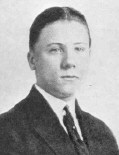 Sterling,
Ray Thayer. Early beau and confidante of Joan's. She met him in 1918
in Kansas City when
she attended the St. Agnes school and he was a senior at
nearby Northeast High.
Joan said: "Ray was the
one I called when anything went wrong, and I loved him with my whole
fourteen-year-old
heart. Ray wanted me to go out and get my dreams. Once I was in the
process
of realizing them, I lost him." The two maintained their friendship--
talking,
taking drives, attending dances together and/or corresponding--
throughout Joan's chorus-girl
travels and returns home, up until the time that she left Kansas City
for good in January 1925 for her trip to Hollywood, after which they
never saw
each other again. He died a bachelor. (LW, JB) In
CWJC, Joan says "I never would have gotten to Hollywood if he'd wanted
me, but he didn't..." (Thanks, Ray!)
Sterling,
Ray Thayer. Early beau and confidante of Joan's. She met him in 1918
in Kansas City when
she attended the St. Agnes school and he was a senior at
nearby Northeast High.
Joan said: "Ray was the
one I called when anything went wrong, and I loved him with my whole
fourteen-year-old
heart. Ray wanted me to go out and get my dreams. Once I was in the
process
of realizing them, I lost him." The two maintained their friendship--
talking,
taking drives, attending dances together and/or corresponding--
throughout Joan's chorus-girl
travels and returns home, up until the time that she left Kansas City
for good in January 1925 for her trip to Hollywood, after which they
never saw
each other again. He died a bachelor. (LW, JB) In
CWJC, Joan says "I never would have gotten to Hollywood if he'd wanted
me, but he didn't..." (Thanks, Ray!)
Stern, Isaac. Did John Garfield's violin-playing in Humoresque.
Stewart, Donald Ogden. Screenwriter of Joan's '41 film A Woman's Face. He was active in anti-fascist activities and Joan's friendship with him and attendance at anti-fascist events earned her a 100-page dossier in FBI files. (LW)
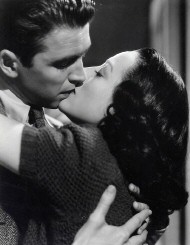 Stewart,
James. (5/20/1908 - 7/2/97) American acting legend and Joan's
co-star in Ice
Follies of
1939
and The
Gorgeous Hussy
(1936). Stewart was born in Pennsylvania and was active in theater
at Princeton
before moving to NYC in 1932 to pursue a career on Broadway.
(While
in New York, he roomed with Henry Fonda and director Joshua
Logan.)
Stewart made his Hollywood debut in 1935's The Murder Man
and made over 90 films before his retirement in the 1980s.
He was
nominated for an Oscar 5 times (1939's Mr Smith Goes to
Washington,
1940's Philadelphia Story, 1946's It's a Wonderful
Life,
1950's Harvey, and 1960's Anatomy of a Murder),
winning
for Philadelphia Story. Other notable films include
his work
with Hitchcock in '48's Rope, '54's Rear Window,
and
'58's Vertigo.
Stewart,
James. (5/20/1908 - 7/2/97) American acting legend and Joan's
co-star in Ice
Follies of
1939
and The
Gorgeous Hussy
(1936). Stewart was born in Pennsylvania and was active in theater
at Princeton
before moving to NYC in 1932 to pursue a career on Broadway.
(While
in New York, he roomed with Henry Fonda and director Joshua
Logan.)
Stewart made his Hollywood debut in 1935's The Murder Man
and made over 90 films before his retirement in the 1980s.
He was
nominated for an Oscar 5 times (1939's Mr Smith Goes to
Washington,
1940's Philadelphia Story, 1946's It's a Wonderful
Life,
1950's Harvey, and 1960's Anatomy of a Murder),
winning
for Philadelphia Story. Other notable films include
his work
with Hitchcock in '48's Rope, '54's Rear Window,
and
'58's Vertigo.
Writer Charles Castle interviewed Stewart for his 1977 Joan bio The Raging Star:
My first impression of Joan Crawford was of glamour. Glamour had nothing to do with aloofness or temperament, it had to do with friendliness, tremendous vitality and hard work, ambition and constant desire to improve her work, and to get knowledgable about things that were important to her work....In picture acting, I think she had the right idea. She had none of this "clear the set while I get in the mood" attitude. She developed a wonderful approach to her work by her desire to improve her craft. She studied voice. I remember when we were doing Ice Follies she would appear at the studio before five o'clock every morning for coaching. We'd all marvel at this....It was important to her to study opera because she felt it would be good as part of her training, and for her overall knowledge of her screen craft...
[re Ice Follies] I said to Joan, "Aren't you bothered about having to learn to skate for this movie?"And she just replied, "Oh, I don't think about ice skating. You just learn to do it the way you learn to do everything else in life." And sure enough, she learned to ice-skate without any trouble....
We have both been referred to as perfectionists, but I don't know what that word means. If it means trying to keep things going by learning your craft so that you can get it done to the best of your ability and not have the acting show, then I suppose that's what it is. If it means standing up against this tremendous technical thing which you have to cope with in the movies all the time, doing things with credibility and being believable when you're surrounded by machines and cameras and technical men with lights and everything else to surmount...This is part of a craft that takes learning, and if you get so that it doesn't bug you, then you can understand why Joan Crawford was so good at her job. It wasn't a question of take after take with Joan Crawford either...the spontaneity was a tremendously important thing. The fact that you can't have it show is, I think, where Joan scored. It was a good quality that she enjoyed. By learning her craft Joan was a very graceful person, not in the sense of being a ballet dancer, but in her grace of moving and in her natural movement. This is the thing that added to her glamour....
When you saw Joan Crawford there, right in front of your eyes, she was Joan Crawford up there, whether she wore a bathing suit or a long, regal gown. She was Joan Crawford, but the skill and perfection was the fact that she could be Joan Crawford, but with deference to the character, and make the character believable on the screen....
Strength is a good way to describe Joan....When she came into a room, whatever kind of room it was, everybody knew it. Everybody turned around and looked. Well, that's strength, but she didn't come on strong. It wasn't a force thing. She didn't need to exude that strength.
Stinky. According to Mommie Dearest, Joan insisted that Christina's school friends call her this.
St. Johns, Adela Rogers. Hearst reporter, friend of Joan.
St. Malachy's. Church in NYC where Joan and Doug Fairbanks, Jr., were married. See this site's Geography page for more photos and info.
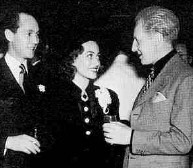 Stokowski,
Leopold. Famed conductor of the Philadelphia Symphony Orchestra (and
later
companion of Garbo). He came to Hollywood in 1937 to appear in two films, and
was given a reception by Joan and husband Franchot Tone at the
Ambassador Hotel.
At this time, Joan had been training to sing opera and performed for
Stokowski
at the theater in her home several weeks after the reception. Joan later
reported overenthusiastically
to friend Anita Loos that Stokowski was "wild for
me to give up the movies
and study to be an operatic diva." (LW)
Stokowski,
Leopold. Famed conductor of the Philadelphia Symphony Orchestra (and
later
companion of Garbo). He came to Hollywood in 1937 to appear in two films, and
was given a reception by Joan and husband Franchot Tone at the
Ambassador Hotel.
At this time, Joan had been training to sing opera and performed for
Stokowski
at the theater in her home several weeks after the reception. Joan later
reported overenthusiastically
to friend Anita Loos that Stokowski was "wild for
me to give up the movies
and study to be an operatic diva." (LW)

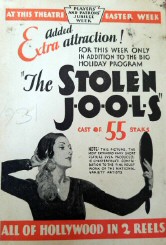
Stolen
Jools, The (aka The Slippery Pearls in the UK). Promotional short film
(20 minutes) released 4/4/31 (US) and 9/32 (UK) to raise
funds for the National Variety Artists Tuberculosis Sanitarium at
Saranac Lake,
NY. Sponsored by Chesterfield Cigarettes. Produced by the Hollywood Masquers Club, with various studios contributing facilities, and the stars working
for
free. Stars
included Joan, Norma Shearer, Gary Cooper, Edward G. Robinson, William
Haines, Doug Fairbanks, Jr., Laurel and Hardy, Maurice Chevalier, and Barbara
Stanwyck.
The plot was a whodunit involving a search for Shearer's stolen jewels.
Joan
appears early on in a short scene with William Haines; a detective
overhears
them discussing something she's taken from Shearer's party the night
before--turns
out it's only a little dog, not the contraband jewels.
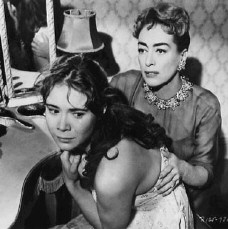 Story
of Esther Costello, The. Columbia, 1957. Directed (and produced) by David
Miller, 127 minutes.
Story
of Esther Costello, The. Columbia, 1957. Directed (and produced) by David
Miller, 127 minutes.
Joan stars as "Margaret Landi," who, after a trip to Ireland, adopts a deaf-dumb-n-blind girl (Heather Sears). The two become a hit on the lecture circuit, and Margaret's seedy ex (Rossano Brazzi) steps back into the picture. Says Joan in CWJC:
This was my last really top picture, and frankly, if I think I deserved an Oscar for "Mildred Pierce" I deserved two for "Esther Costello." It was one hell of a demanding role, and David Miller directed it superbly, but I played it in my own pitch, the way I thought it should be played, and I was right. The complexities of the part were staggering. Nothing but very fond memories plus the usual nagging question: Why the hell didn't more pictures like this come along? Why did I get stuck in freak shows?
Sidenote: In 1959, comedian Lenny Bruce did a bit on his "Togetherness" album called "Esther Costello Story" (2:41)--with a sarcastic summary of the film and rape scene--which can be found on YouTube as of Feb. 2022.
The Story of Esther Costello page.
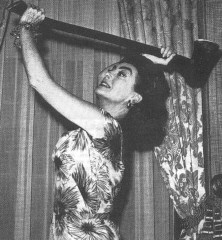 Strait-Jacket.
Columbia, 1964. Directed and produced by William
Castle, 93 minutes. Joan stars
as "Lucy Harbin," who ax-murdered her unfaithful husband and his lover
20 years earlier and now returns after a psychiatric-hospital stay to
her brother's farm to begin a new life.
Co-stars Diane Baker as her
daughter, Leif Erickson as her brother, with a creepy
turn by George Kennedy as the chicken-chopping handyman. (Trivia:
Real-life Pepsi
VP Mitchell
Cox makes a cameo as a doctor coming to check on Lucy. Lee Majors
makes his movie-debut as the murdered husband. Joan Blondell was
originally
slated for the role, but was injured prior to filming.)
Strait-Jacket.
Columbia, 1964. Directed and produced by William
Castle, 93 minutes. Joan stars
as "Lucy Harbin," who ax-murdered her unfaithful husband and his lover
20 years earlier and now returns after a psychiatric-hospital stay to
her brother's farm to begin a new life.
Co-stars Diane Baker as her
daughter, Leif Erickson as her brother, with a creepy
turn by George Kennedy as the chicken-chopping handyman. (Trivia:
Real-life Pepsi
VP Mitchell
Cox makes a cameo as a doctor coming to check on Lucy. Lee Majors
makes his movie-debut as the murdered husband. Joan Blondell was
originally
slated for the role, but was injured prior to filming.)
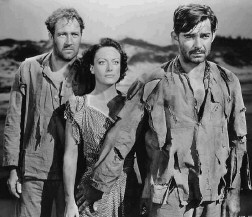 Strange
Cargo. MGM, 1940. Directed by Frank Borzage, 113 minutes. Based
on the 1936 novel by Richard Sale. Joan plays cafe
chanteuse "Julie" and co-stars for the 8th and final time with
Clark Gable. Ian
Hunter and Peter
Lorre co-star. Even after
the studio cleaned up certain scenes after the Legion of Decency's
initial "Condemned"
rating, "Cargo"
was still banned in Cleveland, Detroit, and Providence for its "lustful
implications
in dialogue and situations." Joan described her role as "a singer-tramp,
who escapes from a French penal colony with a bunch of convicts who have
only
two things on their minds--freedom and sex with me." (DF) Says Joan in
CWJC:
Strange
Cargo. MGM, 1940. Directed by Frank Borzage, 113 minutes. Based
on the 1936 novel by Richard Sale. Joan plays cafe
chanteuse "Julie" and co-stars for the 8th and final time with
Clark Gable. Ian
Hunter and Peter
Lorre co-star. Even after
the studio cleaned up certain scenes after the Legion of Decency's
initial "Condemned"
rating, "Cargo"
was still banned in Cleveland, Detroit, and Providence for its "lustful
implications
in dialogue and situations." Joan described her role as "a singer-tramp,
who escapes from a French penal colony with a bunch of convicts who have
only
two things on their minds--freedom and sex with me." (DF) Says Joan in
CWJC:
Clark and I did our best work together in "Strange Cargo." We had always been close, sometimes too close, but now we knew each other as mature persons and the chemistry was still there and it added to the fire. We both had good parts, the kind the critics call "fully realized." The story line was strong and the screenplay was splendid and Frank Borzage let us take it and run. And baby, we ran. I remember--it was the second day of shooting. We were rehearsing one of the big scenes that came early in the picture, and all of a sudden Clark said, "Joan, whatever you want to do, whatever you want me to do, that's the way it is. You've become an actress and I'm still Clark Gable." I think he underestimated himself, but that's the way it played.
Strassfield, Adele. A lesbian Hollywood secretary of Joan's in the '60s. She's mentioned in Liz Smith's book excerpt about Joan.
Strickling, Howard. MGM publicity head, who took over the handling of Joan post-Pete Smith. LW says: Strickling knew exactly how to handle the press, and was invaluable throughout Joan's career at Metro. While he was in charge, no Crawford story ever made the front page, with the exception of headlines about her marriages and divorces. Said Joan: I adored Howard Strickling...if Mayer did put us under lock and key, Howard was an adorable guard. (CWJC)
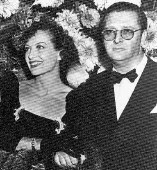 Stromberg,
Hunt. Producer of the Joan-films Our Dancing Daughters ('28),
Our Modern Maidens ('29), Chained ('34), The Women
('39), Susan and God ('40). (CM)
Stromberg,
Hunt. Producer of the Joan-films Our Dancing Daughters ('28),
Our Modern Maidens ('29), Chained ('34), The Women
('39), Susan and God ('40). (CM)
Stuttle, Effie H. Headmistress of the private Rockingham Academy in Kansas City, which Joan, responsible for cleaning the place as well as studying, attended. Stuttle was abusive to Joan, pulling her by her hair, beating and kicking her. (LW)
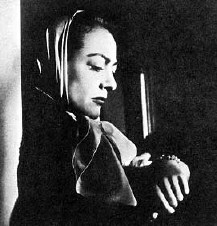 Sudden
Fear. RKO Radio Pictures, 1952. Directed by David Miller, 110 minutes. Based
on the novel by Edna Sherry. Joan
plays wealthy playwright "Myra Hudson," who falls in love with a shady
character whom she'd turned down for a role in her play (Jack Palance). Gloria
Grahame co-stars. Joan received both Oscar and Golden Globe nominations
for Best Actress for this role. Says Joan in CWJC: Melodramatic
as hell, but the story and script were strong, not too original but
strong,
and the casting couldn't have been better, and the director...not only
knew
what he was doing but took cues from all of us. No regrets.
Sudden
Fear. RKO Radio Pictures, 1952. Directed by David Miller, 110 minutes. Based
on the novel by Edna Sherry. Joan
plays wealthy playwright "Myra Hudson," who falls in love with a shady
character whom she'd turned down for a role in her play (Jack Palance). Gloria
Grahame co-stars. Joan received both Oscar and Golden Globe nominations
for Best Actress for this role. Says Joan in CWJC: Melodramatic
as hell, but the story and script were strong, not too original but
strong,
and the casting couldn't have been better, and the director...not only
knew
what he was doing but took cues from all of us. No regrets.
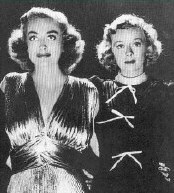 Sullavan,
Margaret. (5/16/11 - 1/1/60) Film and stage actress. Appeared
in The
Shop Around the Corner and Three Comrades, among others. Died
of a drug overdose at age 49. Joan's co-star in 1938's The Shining Hour. Joan specifically
asked for Sullavan to play the role of Judy, despite L.B. Mayer's warning that
the accomplished stage actress could steal the picture from her. Said
Joan in
US: I'd rather be a supporting player in a good picture than
the star of a
bad one. Sullavan's impending childbirth during
the filming of "Hour" inspired Joan to want children, as well. But
Joan later said in CWJC: She
was a truly great actress and a fine woman, but she was so unstable she
could
barely cope with her career and she certainly couldn't cope with her
children.
(Sullavan
daughter Brooke Hayward's 1977 account of her life with her tragic
mother, Haywire,
was more sympathetic than her counterpart Christina's
book.)
Sullavan,
Margaret. (5/16/11 - 1/1/60) Film and stage actress. Appeared
in The
Shop Around the Corner and Three Comrades, among others. Died
of a drug overdose at age 49. Joan's co-star in 1938's The Shining Hour. Joan specifically
asked for Sullavan to play the role of Judy, despite L.B. Mayer's warning that
the accomplished stage actress could steal the picture from her. Said
Joan in
US: I'd rather be a supporting player in a good picture than
the star of a
bad one. Sullavan's impending childbirth during
the filming of "Hour" inspired Joan to want children, as well. But
Joan later said in CWJC: She
was a truly great actress and a fine woman, but she was so unstable she
could
barely cope with her career and she certainly couldn't cope with her
children.
(Sullavan
daughter Brooke Hayward's 1977 account of her life with her tragic
mother, Haywire,
was more sympathetic than her counterpart Christina's
book.)
Sullivan, Barry. Plays Joan's tormented husband "Avery Phillips" in '55's Queen Bee and Joan's tormented doctor in the pilot episode of the TV show Night Gallery.
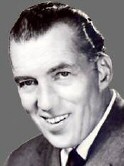 Sullivan,
Ed. (9/28/01 - 10/13/74) This television icon, whose famed
Sunday-night CBS variety show ran from 1948 to 1971, began
his career
as a sports writer in 1919, eventually becoming a Broadway
gossip columnist in 1929. In the '30s and '40s, in addition
to his
regular column, he also produced vaudeville shows and was a
commentator for CBS radio.
Sullivan,
Ed. (9/28/01 - 10/13/74) This television icon, whose famed
Sunday-night CBS variety show ran from 1948 to 1971, began
his career
as a sports writer in 1919, eventually becoming a Broadway
gossip columnist in 1929. In the '30s and '40s, in addition
to his
regular column, he also produced vaudeville shows and was a
commentator for CBS radio.
Below is an excerpt from James McQuire's book Impressario: The Life and Times of Ed Sullivan re Sullivan and Joan. (My note: The time frame mentioned in the first paragraph re Joan and Ed's visits and magazine feud is incorrect. Mannequin was shot in 1938. The unflattering Sullivan column and Joan's response to it both appeared in Hollywood magazine in 1941, just after Joan's 1940 film Susan and God was released; this excerpt incorrectly indicates that the magazine interactions appeared prior to the Mannequin meeting. See the link below for a transcript of the magazine feud.) Thanks to Danny for sending in this excerpt.
In his first week he visited the MGM lot to chat with Joan Crawford and director Frank Borzage, who stopped work on MANNEQUIN for the publicity effort. Sullivan and Crawford had tangled in New York a few years earlier, when Ed tried to enlist her to appear in a charity event he was hosting and she refused. He had taken journalistic revenge, writing in his column, 'One wonders how Joan Crawford has gotten this far in show business with so little talent.' Crawford had hit back, sending an open letter to a fan magazine decrying Sullivan's efforts as 'cheap, tawdry, and gangster journalism.' But on the set of MANNEQUIN, all was apparently well between the screen goddess and the new Hollywood columnist.Crawford, according to Ed, greeted him warmly: 'The night we had dinner at 21 in New York I said you belong in Hollywood,' remembered La Crawford, 'And here you are...' For Ed, who had so often attacked phonies in his column, his report of an affectionate meeting with Crawford was a remarkable about-face.
He spoke with Joan Crawford a year after moving to Hollywood. His kind column treatment of the actress had won him extensive access. When he interviewed her in August 1938, Crawford was at the tail end of her third of five (sic) marriages. Says Ed, 'I asked Joan Crawford yesterday if she'd ever try Love again. She shook her head emphatically.' Joan replied, 'I don't believe there's a man in the world who has the capacity for taking love seriously for more than a few months. Girls can and do, but not men.' Said Ed, 'I suggested that perhaps her own driving ambition for a career had overpowered Daniel Cupid. She said: 'I was most ambitious to make a success of marriage.'
After speaking with her, he wrote an extended analysis of Crawford's troubled relationship with Franchot Tone, a serious dramatic actor on the New York stage. 'Undoubtedly he must have resented the fact that his wife was a star.' Perhaps, he theorized, it was alcohol---Tone liked vodka and Crawford reportedly didn't drink (though she later drank heavily), or perhaps it was something as simple as the noise he made brushing his teeth...'On such trifles was Reno constructed,' Ed noted.
By 1965, Joan and Sullivan had resumed a friendly professional relationship, as witnessed by this letter Joan sent him re USO activities in which they were both involved.
Ed Sullivan Show site. NYTimes obit. IMDb page.
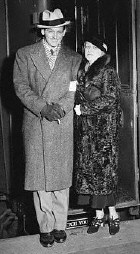 Sully,
Beth Fairbanks Evans Whiting. Doug Fairbanks, Jr.'s mother. Says
Doug: Once
we were married, Joan's inlaw problem was with my own mother,
Beth, not my stepmother, Mary [Pickford], and my father...My mother
would have
resented any young woman who took me further away from her. But Beth did
try
to be pleasant to her... (LW)
Sully,
Beth Fairbanks Evans Whiting. Doug Fairbanks, Jr.'s mother. Says
Doug: Once
we were married, Joan's inlaw problem was with my own mother,
Beth, not my stepmother, Mary [Pickford], and my father...My mother
would have
resented any young woman who took me further away from her. But Beth did
try
to be pleasant to her... (LW)
Sully and husband-to-be Jack Whiting were witnesses at Joan and Doug's 6/3/29 wedding. (US)
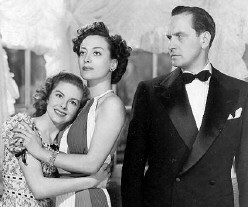 Susan
and God. MGM, 1940. Directed by George Cukor,
117 minutes. Joan stars as religious convert/social
gadfly "Susan Trexel," along with Fredric March,
who plays her alcoholic husband seeking a reconciliation. (Rita Hayworth
is
a supporting cast-member.) Based on the play by Rachel Crothers that
opened
in NYC in 1937 and ran for 288 performances.
Susan
and God. MGM, 1940. Directed by George Cukor,
117 minutes. Joan stars as religious convert/social
gadfly "Susan Trexel," along with Fredric March,
who plays her alcoholic husband seeking a reconciliation. (Rita Hayworth
is
a supporting cast-member.) Based on the play by Rachel Crothers that
opened
in NYC in 1937 and ran for 288 performances.
Says Joan in CWJC:
...big trouble at first. I simply didn't understand how a woman could give up her husband and her total lifestyle and everything she'd lived for to become a religious nut. I knew it had been a big success on Broadway, so obviously it had something going for it, but not until the day we started shooting, and I went to George Cukor a little hysterical, did I understand who the hell I was playing, and why. In 15 minutes George straightened me out, and from that time on I was Susan straight through the last days of shooting. It was a very difficult part, and I owe a lot to Fredric March--he played foil to me very generously.
Suspense. CBS Radio drama series that ran from 1942 to 1962 for over 940 performances. Joan starred in two 30-minute episodes: "The Ten Years" (June 2, 1949) and "Three Lethal Words" (March 22, 1951).
Internet Archive (listen to The Ten Years and Three Lethal Words)
Stars on Suspense (listen to both Joan episodes)
Vintage Radio Logs Complete "Suspense" Program Listing
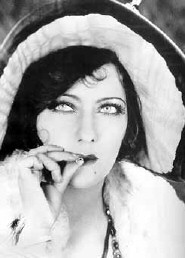 Swanson,
Gloria. (3/27/1897 - 4/4/1983) Silent screen legend who made over 70
films
from 1915 to 1975. The diminutive (4'11") diva was born in Chicago and
made her film debut in 1915 in a Wallace Beery serial. Swanson
subsequently
married Beery and moved with him to Los Angeles, where she went on to
make
over 50 films (including stints with Keystone and Cecil B. DeMille's
company) before
the end of the silent era in 1929. Her notable silent films include Sadie
Thompson (for which she received a Best Actress nomination in 1928;
the
film was remade in 1932 as Rain, with Joan in the starring role),
The
Trespassor (1928, another Best Actress nomination), and Queen
Kelly
(the 1929 indulgence directed by Eric von Stroheim, which Swanson also
produced). Swanson's career was rather lethargic once sound films took
hold,
until her legendary re-emergence in 1950's Sunset Blvd. as
the decrepit diva Norma Desmond, which garnered her a third Best Actress
nomination and re-teamed her with von Stroheim (this time in a
supporting role
as her faithful chauffeur). She went on to other minor film and TV
appearances,
and her last film role was as "Herself" in Airport '75.
Swanson,
Gloria. (3/27/1897 - 4/4/1983) Silent screen legend who made over 70
films
from 1915 to 1975. The diminutive (4'11") diva was born in Chicago and
made her film debut in 1915 in a Wallace Beery serial. Swanson
subsequently
married Beery and moved with him to Los Angeles, where she went on to
make
over 50 films (including stints with Keystone and Cecil B. DeMille's
company) before
the end of the silent era in 1929. Her notable silent films include Sadie
Thompson (for which she received a Best Actress nomination in 1928;
the
film was remade in 1932 as Rain, with Joan in the starring role),
The
Trespassor (1928, another Best Actress nomination), and Queen
Kelly
(the 1929 indulgence directed by Eric von Stroheim, which Swanson also
produced). Swanson's career was rather lethargic once sound films took
hold,
until her legendary re-emergence in 1950's Sunset Blvd. as
the decrepit diva Norma Desmond, which garnered her a third Best Actress
nomination and re-teamed her with von Stroheim (this time in a
supporting role
as her faithful chauffeur). She went on to other minor film and TV
appearances,
and her last film role was as "Herself" in Airport '75.
In her 1980 Random House autobiography Swanson on Swanson, Gloria wrote of Joan and their mutual late-20s times:
People always remembered him [Edward Goulding] first as the man who had scripted and directed Sally, Irene and Mary at Metro-Goldwyn-Mayer in 1925, shortly after he arrived from England. In that film of backstage rivalry, romance, and glory, he had cast three young actresses and made instant successes of them---Joan Crawford, Constance Bennett, and Sally O'Neil. Now, four years later, Joan Crawford was almost a star, grinding out an average of five pictures a year at MGM. Eddie had directed her once more, and she had also made several films with Jack Conway, my old flame from Triangle days, who worked now mainly at Metro. At the start of 1929 she was the talk of Hollywood for dating Doug Fairbanks, Jr., much to Doug Senior's chagrin. There were bets that the twenty-one-year-old actress could never catch Doug Junior, who was not yet twenty, and step up to the Pickfair set while Doug Senior breathed, but before many months were out, she had. Constance Bennett, the Sally of Eddie Goulding's film, was the daughter of the actor Richard Bennett. A beautiful slim blonde, she showed up everywhere with Hollywood's fast set. I knew both of these young women to speak to, but not well, and I was amazed when Eddie Goulding told me that I was Joan Crawford's idol, the woman she wanted to be like. I could not quite imagine a person feeling that way about another person.
IMDb Swanson page. Wikipedia page.